
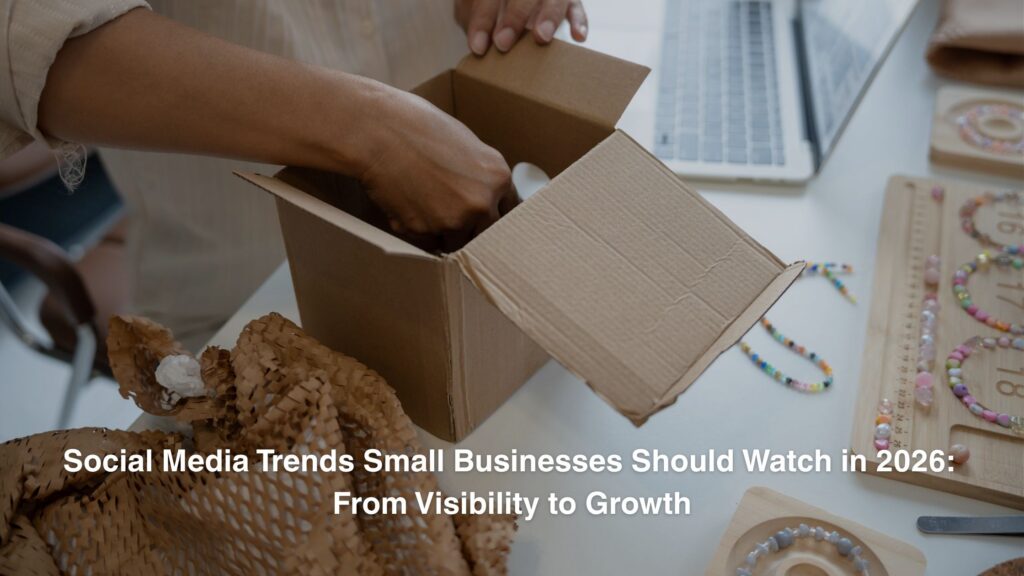
Social Media Trends Small Businesses Should Watch in 2026: From Visibility to Growth
For small businesses, social media is no longer simply a place to promote products or announce offers. It is increasingly part of how customers discover businesses, evaluate their credibility, ask questions and decide where to spend their money. The opportunity in 2026 is to turn that attention into meaningful business outcomes.
October is Small Business Month in Canada, making it a good time to look at how social media is evolving and what these changes mean for small and medium-sized enterprises (SMEs).
For a small business, social media can be one of the most accessible ways to build awareness, showcase expertise, develop customer relationships and generate sales. But managing it effectively is becoming more complicated. Platforms evolve, consumer expectations change, and business owners are expected to produce content consistently while managing everything else involved in running a business.
The answer isn’t necessarily to post more, join every platform or follow every viral trend. It’s to understand where customer behaviour is moving and invest in the activities most likely to support business objectives.
Here are six social media shifts small businesses should pay attention to in 2026.
- Social media is becoming a discovery and search channel
Social media platforms have evolved beyond feeds of updates from friends and followed accounts. Consumers increasingly use content, comments, creator recommendations and platform search to discover products, services and businesses.
This means a social media post may reach someone who has never heard of the business before. A local bakery might be discovered through a video showing how its signature product is made. A skincare business might attract a new customer through educational content addressing a specific concern. A consultant might build credibility by answering a question that prospective clients are actively researching.
The implication for SMEs is straightforward: content needs to be discoverable, not simply published.
Use descriptive captions, relevant keywords, clear service descriptions and location information where appropriate. Think about the questions customers ask before making a purchase, then create content that answers them directly.
For example, a Toronto-based interior designer could create content around “small condo living room ideas” or “how to choose lighting for a north-facing room.” These topics connect the business to a specific customer need rather than relying solely on promotional posts.
What to prioritise: Build content around the questions, problems and interests of your intended audience. Make it easy for people to understand what you offer, who you serve and how to take the next step.
- Short-form video is evolving into repeatable content series
Short-form video remains an important format across platforms such as Instagram, TikTok and YouTube. However, small businesses don’t need to treat every video as a standalone creative project.
One opportunity is to develop repeatable content series that customers can recognise and return to.
TikTok’s 2026 trend report, for example, highlights audiences’ interest in more realistic, behind-the-scenes content, shared experiences and creator perspectives. This reflects an opportunity for smaller businesses to show the people, process and expertise behind what they sell, rather than relying exclusively on highly polished promotional material.
A restaurant could introduce a weekly series showcasing the story behind a menu item. A financial services firm could explain one common financial misconception in each instalment. A beauty business could answer one frequently asked customer question every week.
The value lies in consistency and recognisability. A series creates a framework for content production, reduces the pressure to invent a new concept every time and gives audiences a reason to return.
It can also make better use of limited resources. A single recording session might generate several short videos, still images, quotations and educational posts.
What to prioritise: Choose two or three repeatable content themes that connect to your expertise, customer questions and business objectives. Build a manageable publishing rhythm before increasing volume.
- Trust and proof are becoming essential parts of content
People can encounter countless promotional messages in a single day. For small businesses competing against larger brands with greater advertising budgets, trust can be a meaningful differentiator.
Customers want to understand what a business actually delivers, what working with it feels like and whether other people have had a positive experience.
This creates opportunities for customer testimonials, reviews, demonstrations, frequently asked questions, case studies and behind-the-scenes content. These formats help make a business more tangible and give prospective customers information they can use when evaluating their options.
Consider a local fitness studio. Instead of publishing only membership offers and class schedules, it could introduce its instructors, explain how classes accommodate different experience levels, share approved member testimonials and answer common questions about a first visit.
The content is still marketing, but it also reduces uncertainty.
The same principle applies to professional services, retail, hospitality, healthcare and many other categories. A prospective customer may need reassurance about quality, expertise, reliability or the experience before feeling comfortable making contact.
As AI-assisted content production becomes more accessible, there is also an opportunity for businesses to distinguish themselves through genuine experience, a recognisable point of view and credible evidence of their work.
What to prioritise: Make trust visible. Show how your product or service works, demonstrate your expertise, share customer feedback with permission and respond thoughtfully to questions and concerns.
- Social commerce is about more than completing a purchase in the app
Social commerce is often associated with buying products directly through social platforms. But the broader opportunity extends beyond in-app checkout.
Social content can introduce a product, demonstrate its benefits, answer objections and direct customers to a website, booking page, online store or physical location.
Shopify’s 2026 social commerce analysis highlights the growing role of creator content, customer reviews, user-generated content and AI-assisted discovery in shopping journeys. These elements can work together to help customers move from initial interest to a more informed purchase decision.
For SMEs, the practical lesson is to connect social activity to the rest of the customer journey.
A handmade jewellery business might use Instagram to showcase products in different settings, share customer styling photographs, answer questions about materials and sizing, and direct interested shoppers to a product page with clear pricing and delivery information.
A service business might use LinkedIn to demonstrate expertise, then guide interested prospects towards a consultation booking page.
In both cases, the social post is only one part of the experience. If the next step is confusing, the website is difficult to navigate or enquiries go unanswered, the business risks losing customers it has already attracted.
What to prioritise: Audit the journey from content to conversion. Check that links work, product and service information is clear, contact details are easy to find, and the next action is obvious.
- AI can help small teams work smarter, but strategy still matters
AI tools can help small businesses brainstorm content ideas, organise calendars, draft captions, adapt material for different platforms and summarise recurring customer questions.
The opportunity is particularly relevant for SMEs managing marketing without a dedicated team.
CIRA’s 2026 Canadian Internet Trends report found that 46% of surveyed Canadians had used a generative AI tool in the previous year. Among AI users, 52% had used AI as a search engine. These findings point to a changing digital environment in which businesses need to consider both how they communicate and how customers discover information.
However, easier content production doesn’t automatically lead to stronger marketing.
AI-generated captions can sound generic. Images may fail to represent the real business. Claims may be inaccurate, and publishing more content does not guarantee that the right audience will see it or take action.
Small businesses should use AI to support their process, not replace their judgement.
For example, AI might help a business owner turn a customer question into three content ideas, draft an initial caption and adapt the message for Instagram and LinkedIn. The owner should still verify the information, add real experience, refine the brand voice and decide whether the content supports a meaningful objective.
What to prioritise: Use AI for efficiency where it adds value, while keeping human oversight over accuracy, brand positioning, customer understanding and final approval.
- Measuring business impact matters more than chasing visibility alone
Likes, views and follower growth can indicate that content is attracting attention, but they don’t tell the entire story.
For a small business, the right measures depend on what the business is trying to achieve.
If the objective is awareness, reach among relevant audiences and branded searches may be useful indicators. If the objective is lead generation, qualified enquiries, consultation bookings and conversion rates may be more meaningful. If the objective is online sales, referral traffic, purchases and revenue attributed to social activity deserve attention.
Not every result will be directly attributable to a single post. Social media can influence decisions over time, and customers may discover a business on one platform before converting through another channel.
That is why measurement should connect social activity to broader business performance wherever possible.
A business spending hours creating content should be able to ask: Are we reaching the people we want to serve? Are they taking useful next steps? Which topics generate meaningful conversations? Which formats contribute to enquiries or sales?
The answers can inform what to continue, improve or stop.
What to prioritise: Set a small number of objectives, establish a baseline and review performance regularly. Use the findings to refine the content strategy instead of judging success by engagement alone.
Turning social media trends into a practical strategy
These six shifts do not mean every small business needs to invest in every platform or format. The right approach depends on the audience, category, resources, buying journey and business goals.
A local retailer may benefit from location-based discovery, product demonstrations and customer reviews. A professional services firm may gain more from educational LinkedIn content and lead generation. A beauty brand may need a combination of creator content, product demonstrations, social proof and a seamless online shopping experience.
The common thread is that social media should support a clear business purpose.
For SMEs working with limited time and budgets, I would start with five questions:
- Who are we trying to reach? Define the audience and the needs or problems your business can address
- What should social media help us achieve? Identify whether the priority is awareness, trust, enquiries, sales, repeat purchases or another measurable outcome
- Which platforms make sense for our audience? Choose based on customer behaviour and your ability to participate consistently, rather than platform popularity alone
- What can we create consistently and credibly? Build a realistic content system around your expertise, customer questions and available resources
- How will we know it’s working? Track indicators connected to your objective and use the results to improve the strategy
The goal is not to follow every trend. It is to recognise the changes that matter to your customers and translate them into relevant, useful and commercially effective marketing.
Final thoughts: Small businesses need strategy, not just more content
Social media offers small businesses valuable opportunities to build visibility, establish credibility and create relationships with customers. But as platforms and consumer behaviour evolve, success requires more than a regular publishing schedule.
It requires a clear brand proposition, a strong understanding of the audience, content that serves a purpose, a connected customer journey and measurement that informs decisions.
This is where I believe strategic marketing makes a difference. When brand positioning, content, digital channels, customer experience and commercial objectives work together, social media becomes more than an activity to maintain. It becomes part of a broader growth strategy.
For Small Business Month, that is the opportunity worth focusing on: not simply doing more on social media, but making every marketing effort work harder.
Looking for marketing leadership or strategic support? I bring experience across brand strategy, integrated marketing, digital and social media, PR and communications, and shopper marketing, working across both B2B and B2C environments. I welcome conversations about full-time marketing leadership opportunities, contract engagements and project-based collaborations with businesses looking to strengthen their brand, sharpen their strategy or connect marketing activity more directly to business growth.
You can explore my experience and work at rinkugala.com, or connect with me on LinkedIn.
Sources and further reading
- Statistics Canada: Analysis on small businesses in Canada, second quarter of 2026
- CIRA: 2026 Canadian Internet Trends
- TikTok for Business: TikTok Next 2026 Trend Report
- Shopify: Social Commerce Trends for 2026